

PRESS RELEASE
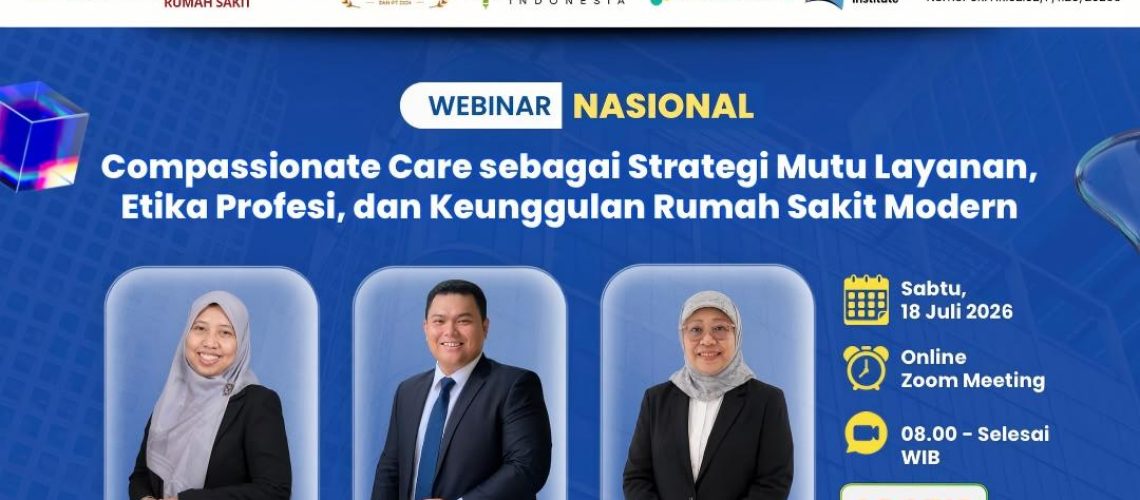
Yogyakarta, 18 July 2026 — SiberMu Law School continues to strengthen its contribution to interdisciplinary collaboration in healthcare through the participation of Afriansyah Tanjung, S.H., M.Kn., M.H., a faculty member of the Department of Private Law, in the National Webinar entitled “Compassionate Care sebagai Strategi Mutu Layanan, Etika Profesi, dan Keunggulan Rumah Sakit Modern.”
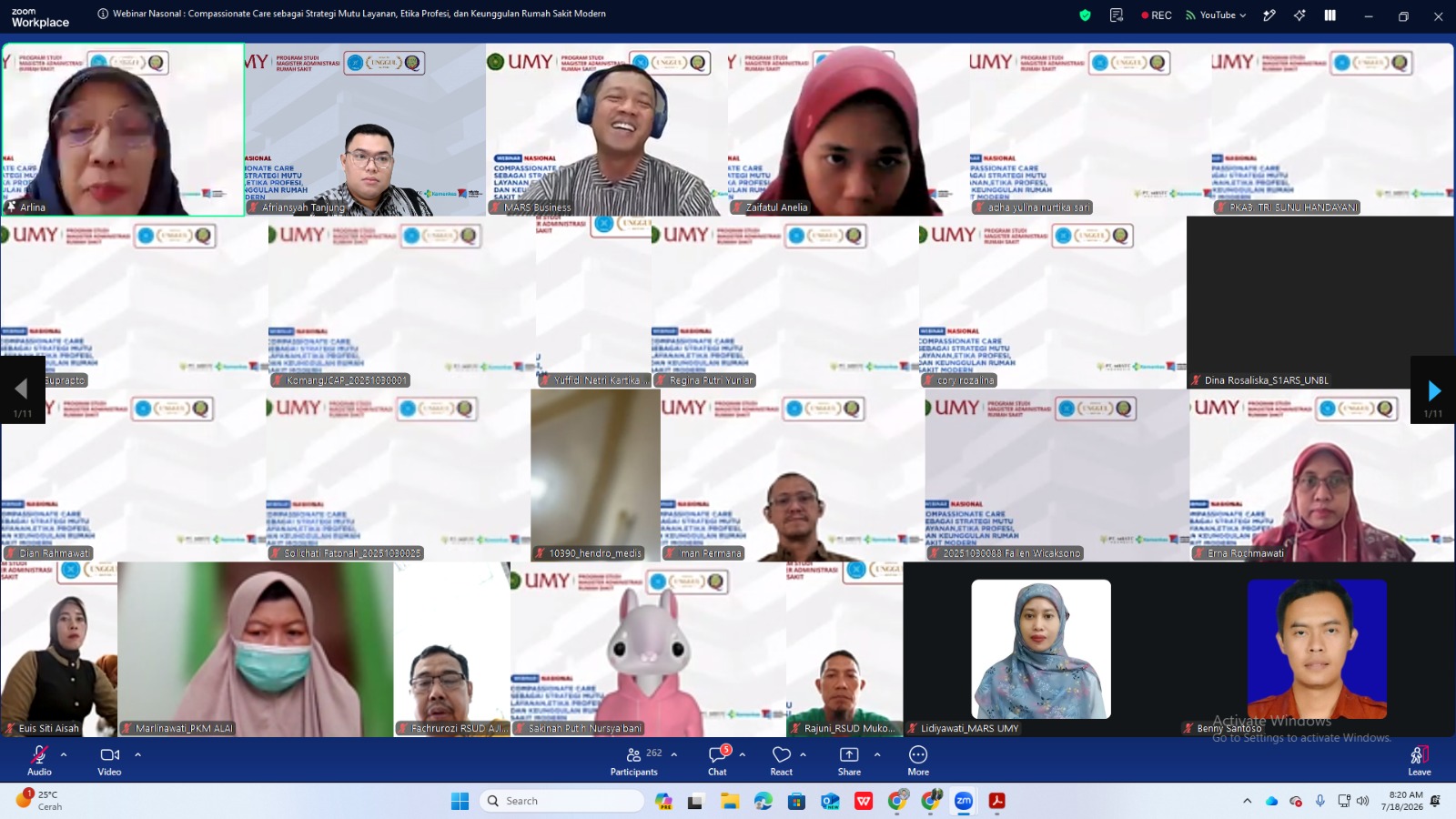
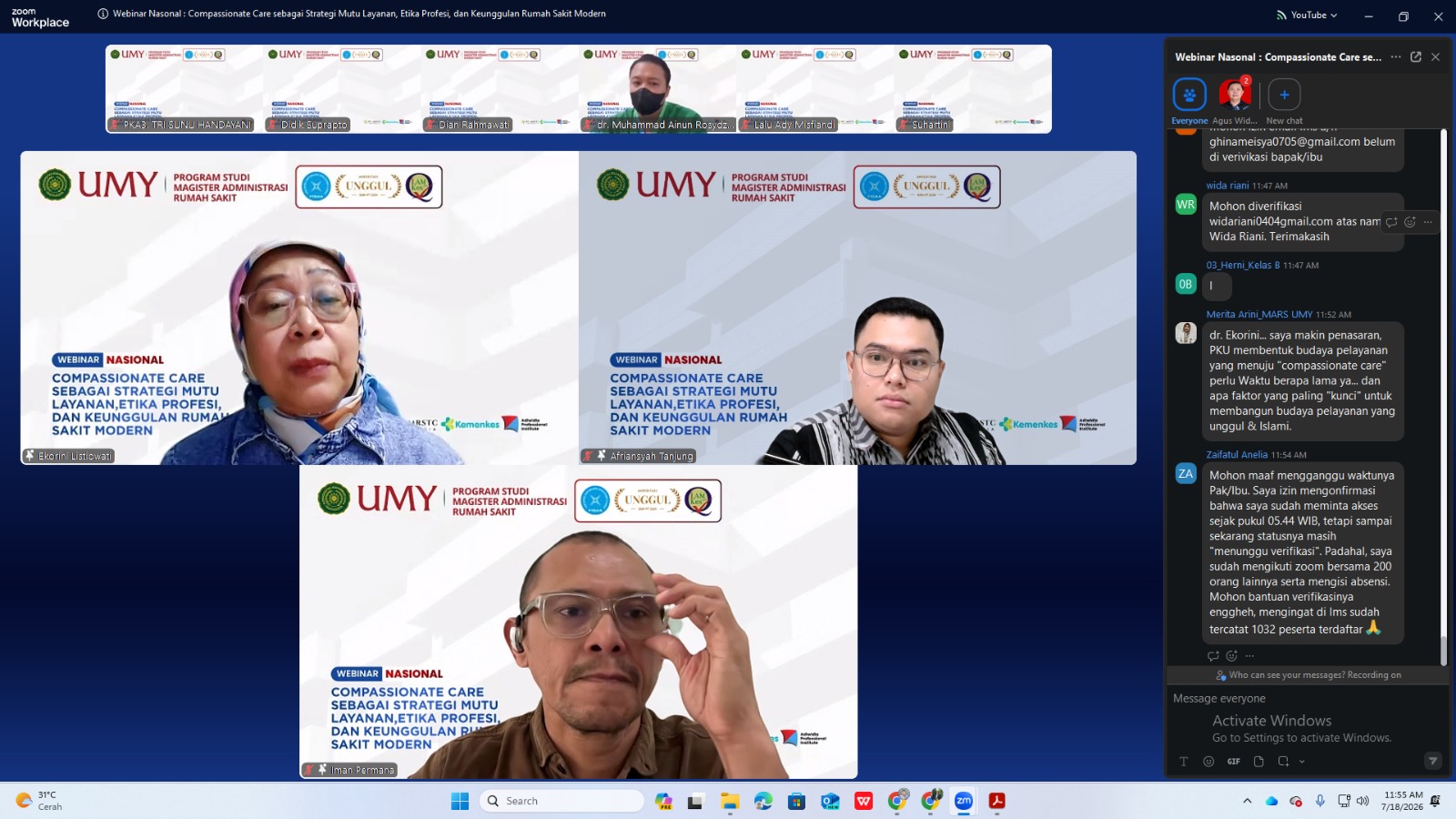
The prestigious national webinar was organized by the Master of Hospital Management Program, Faculty of Medicine and Health Sciences, Universitas Muhammadiyah Yogyakarta, on Saturday, 18 July 2026. The forum brought together perspectives from clinical practice, healthcare law, professional ethics, and hospital management to explore how modern hospitals can provide services that are not only clinically effective, but also compassionate, ethically responsible, and legally accountable.
During the webinar, Afriansyah Tanjung presented his thoughts on “Advance Life Planning (ALP) dalam Era Compassionate Care: Menyeimbangkan Otonomi Pasien, Etika Profesi, dan Mitigasi Risiko Hukum Pelayanan Kesehatan.” His presentation examined Advance Life Planning as an essential instrument for integrating patients’ autonomy with professional ethics, clinical governance, and institutional risk management.
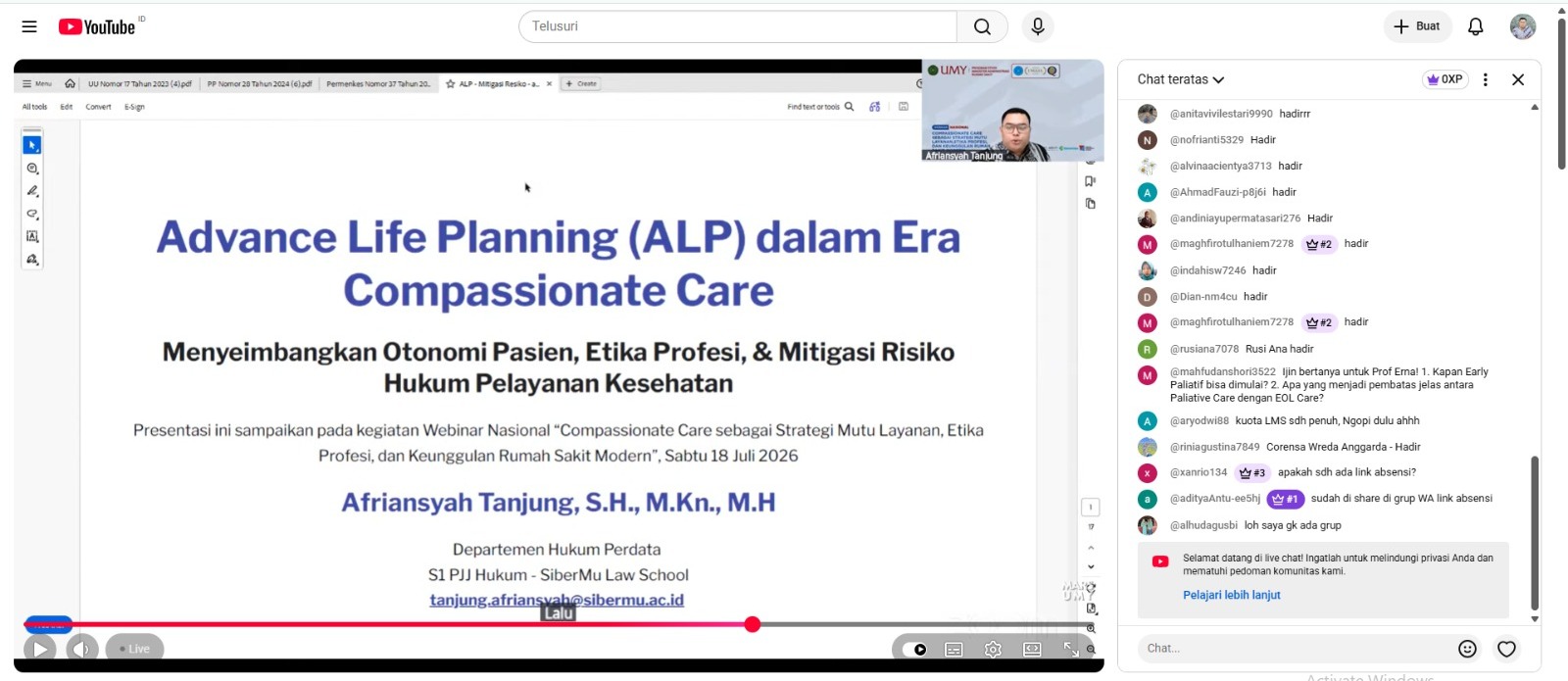
He emphasized that Advance Life Planning should not be understood merely as an administrative document. Instead, ALP represents the outcome of a meaningful and informed dialogue between patients, families, and healthcare professionals. Through a shared decision-making process, patients can communicate their values, beliefs, quality-of-life preferences, and limits regarding future medical interventions while they still possess full decision-making capacity.
This approach ensures that a patient’s voice remains respected even when the patient is no longer conscious or capable of communicating. In this context, ALP becomes a practical expression of patient-centered care by preserving the patient’s wishes and guiding healthcare professionals in making complex end-of-life decisions.
The discussion also addressed the ethical and legal distinctions between Do Not Resuscitate (DNR), withholding treatment, withdrawing treatment, and active euthanasia. A DNR instruction specifically limits cardiopulmonary resuscitation in the event of cardiac or respiratory arrest, without eliminating comfort care, pain management, or palliative services. Meanwhile, withholding or withdrawing medically futile interventions may be considered when such interventions no longer provide therapeutic benefit and merely prolong the patient’s suffering.
From a hospital governance perspective, Afriansyah highlighted the importance of establishing standardized procedures for end-of-life care. Hospitals need clear policies governing clinical communication, patient capacity assessment, documentation, multidisciplinary decision-making, and the resolution of ethical conflicts involving patients, families, and healthcare professionals.
The webinar further explored how properly implemented and documented ALP can support hospitals in mitigating medicolegal risks. Comprehensive documentation can demonstrate that patients or their lawful representatives have received adequate information, understood the consequences of their decisions, and provided consent or refusal voluntarily. Such documentation strengthens institutional accountability and provides greater legal certainty for healthcare professionals acting according to professional standards, ethical codes, and hospital procedures.
A key message from the session was that compassionate care does not end when curative treatment is no longer possible. Compassionate care continues through pain management, palliative support, honest communication, respect for patient dignity, and meaningful assistance for families during difficult medical decisions.
Through this interdisciplinary collaboration, SiberMu Law School reaffirmed its commitment to contributing legal expertise to the development of humane, ethical, and accountable healthcare services in Indonesia.
“Advance Life Planning is a bridge that connects patient autonomy, professional accountability, and institutional legal protection, while representing a practical expression of compassionate care in Indonesia.”
The participation of SiberMu Law School in this national forum demonstrates the importance of collaboration among legal scholars, clinicians, healthcare managers, ethicists, and hospital leaders. Such collaboration is essential for preparing healthcare institutions to respond to increasingly complex clinical, ethical, and legal challenges while ensuring that every patient receives dignified and compassionate care.
|
|
 |
For further details, please access Afriansyah Tanjung’s presentation through the following link: